۱۳۹۶ تیر ۲۷, سه‌شنبه

ANALYSIS: How to protect Iraq from Iranian influence


With the recapturing of Mosul, the rein of ISIS in northern Iraq is coming to an end. This, however, can lead to the reemergence of a far more dangerous threat for the future of this fledgling democracy.
Iran and its destructive meddling Mesopotamia has devastated this entire nation, leaving at least tens of thousands killed, scores more wounded, injured and displaced.
Tehran has continuously targeted the Sunni community in Iraq and taken advantage of the war against ISIS to change the very fabric of this minority. Sunni provinces have been the target of this wrath especially after Nouri al-Maliki, described by many as Iran’s puppet in Iraq, reached the premiership in 2006.

Dark history

Ever since 2003, with a surge beginning under al-Maliki’s watch, Iran has flooded its western border neighbor with financial, logistical and manpower resources, spearheaded by the Revolutionary Guards (IRGC).
The track record of Iran-backed proxy groups and death squads in Iraq is nothing short of deadly and atrocious. One group alone, Asai’b Ahl al-Haq, claims to have launched over 6,000 attacks targeting US soldiers from 2006 onward.
Amnesty International has also filed a disturbing report over Iran-backed militias being supplied US arms by the Iraqi government, only to carry out war crimes targeting the Sunni community.

War against ISIS

The defeat of ISIS must not be considered the end of the nightmare. Far from it. General Stephen Townsend, commander of the coalition forces against ISIS, recently emphasized the importance of all Iraqi parties reaching a political consensus in the post-ISIS stage.
To emphasize his point, Townsend touched on the sensitive topic of Iraqi Sunnis feeling unrepresented in Baghdad.
Former US defense secretary Ashton Carter, who supervised the anti-ISIS effort from early 2015 to January of this year, underscored “chaos and extremism” will follow if the “political and economic campaigns that must follow” fail to render the results needed for Iraq future’s.

The hidden occupation

On a side-note, the internal sectarian drives in Iraq are not be considered the result of an especially bloody history. Iraq’s conglomerate of communities experienced peaceful coexistence for over a millennium.
As Iran began its hidden occupation from 2003 onward, one campaign pillar focused on instigating sectarian strife with the objective of expanding its influence through Shiite communities in strategic areas across the country. Such policies have been carried out vividly in all Sunni provinces recaptured from ISIS control.
There is no need to divide Iraq into federalized states, as this would deepen the rifts amongst a nation that needs to begin rebuilding the bridges and bonds destroyed.
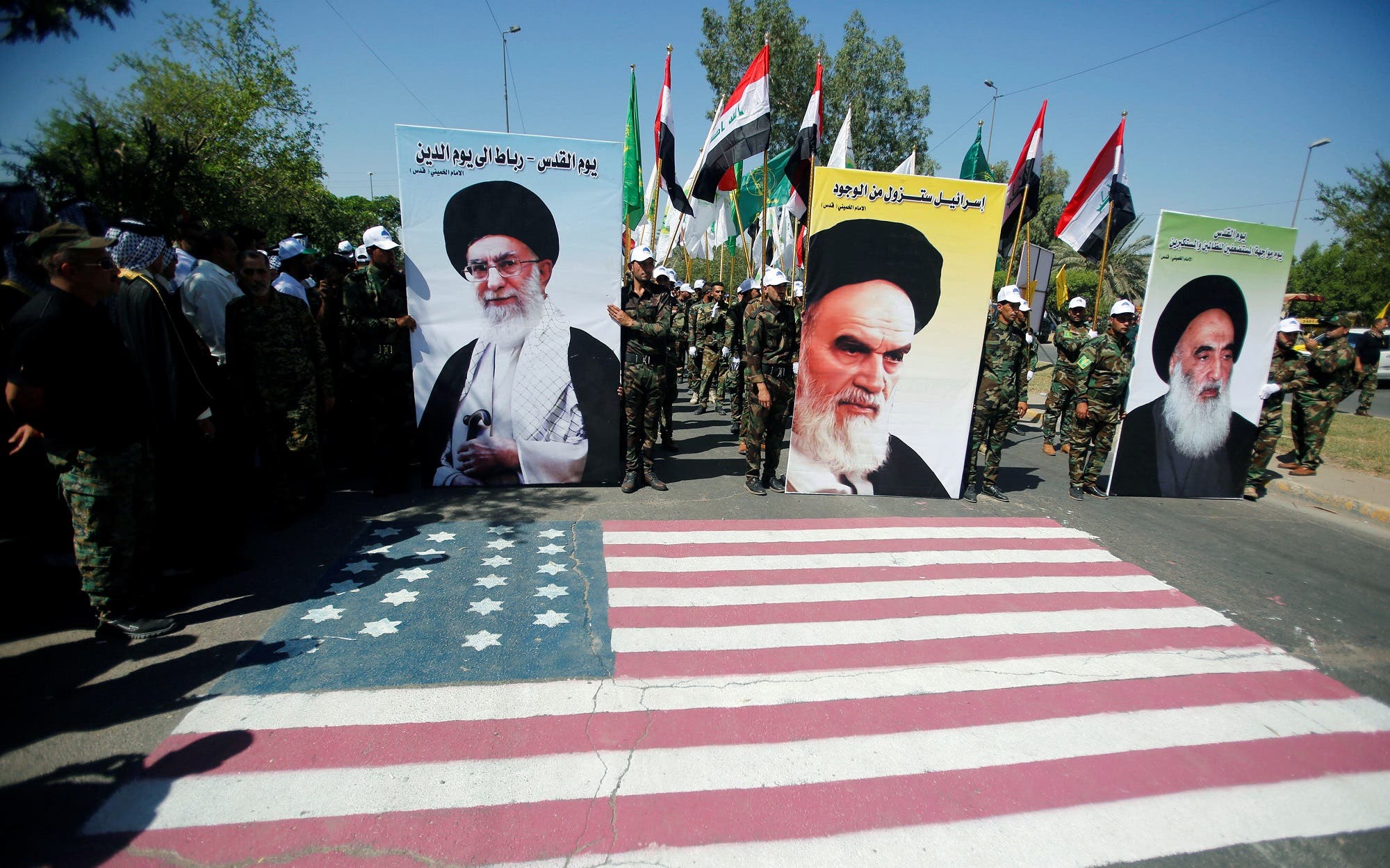
Members of Popular Mobilization hold portraits of Ayatollah Khomeini (C), Supreme Leader Ayatollah Ali Khamenei (L) and Iraq’s top Shi’ite cleric Grand Ayatollah Ali al-Sistani during a parade marking the annual al-Quds Day in Baghdad on June 23, 2017. (Reuters)

Independent figure

Despite all the flaws in the campaign against ISIS, Prime Minister Haider al-Abadi has the potential to be pulled out of Iran’s influence and act as an independent figure. This is especially true as he has stood in the face of Iran’s pressures, while there remains far more necessary cleansing of the mullahs’ influence in Iraq.
Following the historic Riyadh summit earlier this year, it is time for the Trump administration, allied with the Arab World, to take serious action curbing Iran’s influence in Iraq.
All al-Abadi government officials must prove their allegiance to the Iraqi people and not the Iranian regime. The Iraqi judiciary is also heavily under Tehran’s influence, seen specifically when the country’s supreme court last October blocking al-Abadi’s reform package aiming to “decrease the political space — and platform — for sectarian saboteurs and political spoilers like Maliki,” as explained in The Hill.

Steps ahead

Iraq now lays in devastation and the road ahead will be difficult. This country needs the correct support from its well-meaning neighbors – not the regime in Iran – and the international community to once again stand on its own and play its expected part in today’s world.
This is a breakdown of the utmost necessary measures:
1) Stanching Iran’s influence, especially at senior levels in Baghdad and the security apparatus, and supporting al-Abadi distance from Iran
2) Confront Iran’s meddling by preventing al-Maliki from regaining the premier seat, and dismantling the Popular Mobilization Units and all death squads, parallel to blacklisting Iran’s IRGC
3) Supporting the Sunni community in all Iraqi hierarchy and security forces, and establishing an equal method of governance across the country.


In a recent speech, Iranian opposition leader Maryam Rajavi highlighted how Iran has for 38 years been at war with Iraq and other nations in the region and beyond.
She underscored, “…the ultimate solution to the crisis in the region and to confronting groups like ISIS lies in the overthrow of the Iranian regime by the Iranian people and it's Resistance.” That seems to be the only way to protect Iraq from Iran.

IRAN REGIME'S SUPREME LEADER ROLE IN THE PRODUCTION OF MOVIES AGAINST MEK


By INU Staff
INU - Following the ignominy of the movie “Adventure of Nimrooz (Midday Adventure)", made against the People’s Mujahedin Organization of Iran ( PMOI/MEK), the news agency of the Islamic Revolutionary Guards (IRGC) released the news about the meeting of Iranian regime's Supreme Leader Ali Khamenei with film producers which exposes Khamenei’s role in the production of this movie. The IRGC was also involved in the production of the movie in February/March 2017.


The news was first released by the IRGC following confessions and protests among various government bands due to the ignominy of this scandalous film. It was then published by other state-run news agencies.
According to state-run news agencies, Khamenei who was after production of this movie against the MEK, in the meeting with his subordinates who produced the movie said: “This film ‘Midday Adventure’ was very good. All the components of the movie were great; it was a great director; excellent play and great stories. The film was well-made.”


The reports show that Khamenei in the same meeting ordered the production of a movie to and whitewash the crimes of the Evin executioner, Assadollah Lajevardi, and show the facts upside down and misrepresent this criminal.
Funding for the movie against MEK by the Revolutionary Guards!


The story of “Adventure of Nimrooz” was written and directed by Mohammad Hossein Mahdavian and produced by Sayyed Mahmoud Razavi.
Synopsis of the film is a narrative of direct interrogators, torturers and killers of the MEK in 1980s. The movies goal is confronting the rise in popularity of the MEK particularly among the youths who were borne on or after 1981, in order to tarnish the MEK's image and prevent the youth from joining the MEK.
The IRGC and Ministry of Intelligence have been producing numerous movies against the MEK including “Cyanor” and “Adventure of Nimrooz” with the same intention.
Mohammad Hossein Mahdavian, the director and author of the movie “Adventure of Nimrooz,” produced the film under the direct supervision and support of the “OUJ Artistic and Media Organization”
The Artistic and Media Organization called ‘OUJ’
The ‘OUJ Artistic and Media Organization’, affiliated to Cultural Deputy of the IRGC, was formed in 2011 following the sum up and conclusion of the 2009 uprising in Iran. The sum-up of the reports by the intelligence organs including the Eltaqat (Eclectic) Department of the Ministry of Intelligence (specifically dealing with the MEK) indicates that based on the arrests, control of phone calls and emails… it was concluded that 60% to 65% of the 2009 uprising was organized by the MEK and their supporters.


On the basis of this sum-up, Khamenei's regime has taken several steps to confront the uprising in the future. Among these measures was the upgrading of the IRGC deputy information department to the Sepah (Gurads) Intelligence Organization, with the purpose of specifically taking the same role as the Third SAVAK Department in the time of the Shah, known as the “Anti-Sabotage Office,” as well as using the Basij and Plainclothes Organization… as the executive and operational arms of the IRGC.
Alongside these security intelligence agencies, the IRGC’s Cultural Affairs Deputy was expanded and deployed to combat and counteract the awareness of young people using psychological warfare and the injection of reactionary thoughts. (In the last transformation in the second half of 2016, Pasdar Naghdi was transferred from commanding Khamenei's Basij to the IRGC Cultural Deputy position).


Since the people and youth despise and hate the Revolutionary Guards, the IRGC’s Cultural Affairs Deputy created the “Artistic and Media Organization of Peak" as a cultural executive arm in 2011 to pursue the goals of this deputy as an artistic organ.
The head of this organization is Ehsan Mohammad Hassani, who in addition to the IRGC cultural deputy, has connection with the Ammarion (Plainclothes) base and is sponsored and financially supported by Tehran's mayor, Pasdar Qalibaf.

Read More: 
IRAN MURDERED THOUSANDS OF MEK MEMBERS DURING THE SUMMER OF 1988


A professor of political science in Tehran University, Sadeq Zibakalam, who is also a close confidant of Ali Akbar Hashem Rafsanjani, former head of Iran’s Expediency Council, stated that Iran, similar to those who murdered Imam Hossein (the grandson of Prophet Mohammad), has murderedthousands of members of the People's Mojahedin Organization of Iran (PMOI/MEK) in the course of 10 years following the 1979 revolution, most of them during the summer of 1988 in Tehran’s notorious Evin Prison. This was reported by al-Quds al-Arabi daily on February 11th, 2017, in an article written by Mohamed al-Mazhaji.
“Guya News” website also published excerpts of Zibakalam’s remarks on the sideline of Iran’s annual “Fajr” film festival in Tehran marking the 1979 revolution anniversary.
Iran has murdered thousands of opposition MEK members during the years after the 1979 revolution, without any judicial process or proving any crime, Zibakalam reiterated, referring to events of the summer 1988, and issues raised in the sound file of a meeting between the Islamic republic’s “Death Committee” with Hossein Ali Montazeri, the former successor of the Islamic republic’s founder.


Zibakalam also strongly criticized the movie produced with the support of the Revolutionary Guards (IRGC), “Majaraye Nimrooz” (Midday Adventures), which was previewed at the Fajr film festival. He said that the film does not replicate the truth about what took place between the IRGC and MEK during that period.
“We accuse the MEK of conducting a series of assassinations back in the 1980s. Did MEK members carry out these measures for no reason at all?” this Rafsanjani confidant asked.


This film retells the events from the Iranian regime’s point of view, depicting an image of the IRGC as kind individuals defending truth and humanity, and not the truth, he added. Instead, we killed thousands of MEK members in Evin Prison without due process, Zibakalam continued, and added that the country was witnessing a civil war at that period of Iran’s revolution, between the IRGC and the MEK, costing the lives of thousands of people.


The MEK is one of the main organizations that, beginning in 1965 played a pivotal role in the 1979 revolution, through armed resistance and popular movements against Iran’s monarchial regime. In fact, MEK leader Massoud Rajavi was the leading candidate in the presidential elections after the revolution, and the MEK played an important role from 1979 to 1983 inside Iran.


Then, due to the conflict between the state and revolutionary forces, Khomeini, founder of the Islamic republic, prevented many MEK members from holding any possible official jobs in governmental administration, and deprived its members from political activities.
Montazeri’s sound file, released by his son, Ahmad Montazeri, made significant revelations, especially since “Death Committee” members explained the reason for condemning and executing thousands of MEK prisoners in 1988. In response, Montazeri had said not according to sharia, morals or humanitarian principles is it permitted to kill an individual who has been condemned once in court for maintaining their position, because they have not committed a new crime and they were already in prison. The “Death Committee” members emphasized to Montazeri they had to be executed because they approved the MEK.
The “Death Committee” members are still active in high positions in the regime:
Mostafa Pour Mohammadi is one of the most important members of Iran’s
“Death Committee” and he currently is the head of the Ministry of Justice in Hassan Rouhani’s cabinet.
Ibrahim Reisi is now the Supreme Leader’s representative and head of the organization managing the Imam Reza shrine in the city of Mashhad, northeast Iran.
Hossien Ali Nayeri is now deputy head of Iran’s highest court.
Reports by the United Nations confirm the execution of at least 3,600 MEK prisoners in Tehran’s prisons. Other security reports, obtained in 1998, indicate the “Death Committee” executed over 30,410 MEK members across Iran in the summer of 1988. This is in addition to the execution of 3,500 prisoners of leftist parties who were behind bars since the first years of the 1979 revolution.


Ahmad Khatami, a member of Iran’s Assembly of Experts Board of Directors and the Qom Religious School and a Friday prayer leader in Tehran, in response to the “Death Committee” sound file, stipulated for the first time that the execution of MEK prisoners in 1988 was carried out on charges of “moharebe against God and his Messenger” (enmity against God and his Prophet) and according to an order issued by Khomeini. He added that this measure was in line with implementing orders of the Quran, Islamic jurisprudence and a revolutionary measure that has served in the better interest of Islam and Iranian people.


Pour Mohammadi admitted to the accuracy of the issues raised in the sound file and added, “I am proud of implementing Khomeini’s orders against MEK members.” He stated further, that God’s order against them has been carried out.
The Qom Islamic revolution court sentenced Ahmad Montazeri to 21 years behind bars and stripped him of his clerical authority for publishing the sound file.


۱۳۹۶ تیر ۲۶, دوشنبه

A Man Was Brutally Murdered by Iran Regime's Security Force in the Metro Station


morning of Saturday, July 15, 2017, a 40-year-old man was shot dead at the Shahre-Raya subway station by the Iranian regime's security forces.
The man was murdered by the regime's security forces after protesting against a regime’s Mullah who harassed him under the pretext of Enjoining good and forbidding wrong.
Eyewitnesses in the scene say that, contrary to the claims of the regime, the assailant did not do anything with the people and only objected to the Mullah’s harassment.
State run news agency Mehr quoted Hadi Tamhidi, the head of the security council of city of Ray, stating: “this morning a was enjoining a middle-aged man which caused anger in the assailant who attacked the Mullah with knife.
According to reports, this middle-aged person died while being transferred to the hospital.
This criminal act, raised ire among eyewitnesses.
The resistance and angry reactions of the people to the so-called “Enjoining good and forbidding wrong” forces has led some of the regime’s clerics, such as Mullah Nouri Hamedani, to call for the formation of a ministry called "Ministry of promotion of virtue and prevention of vice”
On March 16, 2014, regime’s MPs approved the general plan to "protect those who are Enjoining good and forbidding wrong ".

According to this law, the headquarters of the “promotion of virtue and prevention of vice” was formed and is currently headed by Ahmad Jannati, secretary general of the Regime’s Guardians’ Council.
This volatile environment in the society, has led to increasing division and rift between people and regime’s suppressive agents and thus preparing the ground for more public protests

A democratic alternative to the Iranian regime – 'Free Iran' rally highlights MEK's role in Iranian resistance


During the 'Free Iran' rally in Paris on July 1, the mood was festive and clearing upbeat, as speakers discussed the movement of MEK members from Iraq to Albania.


But many of the speakers and delegations also spoke of the real possibility of regime change in Iran, as they noted major changes on the international scene. Speaker after speaker from the United States pointed to the new policies of the Trump administration, while others acknowledged the Obama administration for its efforts to remove the MEK from the terrorist list.

Still, the highlight of the event was the keynote address by Maryam Rajavi, the National Council of Resistance of Iran (NCRI) President-elect. She noted that there was an alternative to the current regime and its extremism.
"Since last July, the Iranian Resistance has hoisted the banner of seeking justice for the victims of the massacre of political prisoners 29 years ago, turning it into the main focus of political discourse in Iran today," said Rajavi.
She noted that in the recent Iranian elections, which many speakers called a "sham", that the slogan of the resistance was "No to the executioner, no to the charlatan". It was a slogan that was widely embraced by the Iranian people, and referenced the attempt by Khamenei to elect Raisi, a member of the death commission in the 1988 massacre.
Rajavi said there is alternative to the Iranian regime and it is the Iranian resistance.
"It is relying on political prisoners, who reaffirmed their support recently for this gathering from the depth of their cells and dungeons. It is relying on women, workers, teachers, professionals, and selfless youths. It is relying on their unsparing love and generous support, those who barrow money and sell their houses and properties to help keep this Resistance independent, strong, and solidified," said Rajavi.
She noted that the Resistance has continued to fight for freedom and stood by what it has said and promised.
"The Iranian nation is proud to have created a democratic alternative through resistance and great suffering and sacrifice. This decisive asset,…did not exist at the time of the Shah," said Rajavi. She acknowledged that this left a vacuum that allowed the regime to grow and take root.
As part of her discussion of the Resistance, she acknowledged the contributions of Massoud Rajavi, who has been a leader in the Resistance, but also active in encouraging those in Camp Liberty to keep fighting and maintain the struggle for freedom.


.

Iran Regime's Official: Suppressing People in 1980s and the Events of 1988 (Massacre of the Political Prisoners) Will Uproot Us


regime Channel-1 TV broadcast on 14 July 2017 the speech of Hassan Rahimpour Azghandi, of Khamenei’s band, for a group of the Revolutionary Guards.
In these talks, expressing fear at the widespread massacre of 1988 and the massacres of the 1980s being raised again in the community and the way out of the power struggle in the recent election, attacking the regime’s President Hassan Rouhani, he says: “Now these have become negative? What happened in 1988? You yourself were an official of the regime in 1988... You did not know who the (Mojahedin/MEK) were in 1988? Now accusing the Imam (Khomeini) and questioning him!”
Azghandi mentions the issue as a poison that affects the regime gradually and says: “Somehow, they want to engineer the mental calculations of public opinion, and in particular the officials of the country, in a way that this poison gradually comes and drop by drop affects us, and little by little they come to the conclusion that in the 21st century, question the slogans of the 1980s and the Imam’s (orders).”
He addresses Rouhani and says, “If you have dignity now, that’s due to the same 1980s's and you after 30 years are using it. Destruction of the 1980s events and the case of the war (8-years Iran-Iraq war) and the cases of 1988 (massacre), these are the destruction of the Imam. They don’t name of the Imam but their goal is to hit the Imam himself, the goal is to hit the revolution.... No sir, you have misunderstood and developed misbehaviour. The enemy has not changed. You have changed. Your enemy is not afraid of you, your fear the enemy....”
He then continues: “You are changing. You are saying the words of the enemy who talks about the events of the 1980s, those who are still cursing the Imam, and have just begun the trial of Imam....”
Khamenei's band piece addresses Rouhani again and adds: “Those who talk these words inside the country... they, some of them, insulted the Imam and the Revolution.... They have a history with the Intelligence Ministry that is they are an Intelligence agent and have had the most security and intelligence government since the beginning of the revolution and now all of them have become intellectuals everywhere and say we are academics. One should not look at the issues from intelligence and security point of view.
Azghandi ultimately says the main words: “... it will uproot us, even if we have the largest missile caches.”

۱۳۹۶ تیر ۲۴, شنبه

« Trump-haters rallying Saturday | Brazil car wash update, aka bye-bye, Lula »


Legacy of a dictator: Iran's 30,000 murdered, then and now

In the wake of the 30th anniversary of the massacre of 30,000 political prisoners in summer of 1988 in Iran, the people of Iran and especially families of the victims are still waiting for justice and an international tribune.
In the summer of 1988, the political prisoners were systematically executed in almost two months.  In a barbaric two-month purge, prisoners, including teenagers as young as 14, were loaded onto trucks in groups and hanged from cranes.
During the past three decades, the regime blocked all attempts to investigate the extent of the massacre.  They even went farther to cover up the crimes by toppling and damaging cemeteries and headstones of martyrdom graves with bulldozers.
In Iran, there is no criminal justice system or government institutions deterring crime or sanctioning those who violate laws with criminal penalties.  The supreme leader, Ali Khamenei, controls everything.  He sets the tone and direction of Iran's domestic and foreign policies.  Many of those in the "Death Commission" responsible for the 1988 massacre are still in power, including Mostafa Pour-Mohammadi, who is now Iran's justice minister in President Hassan Rouhani's Cabinet, and cleric Ebrahim Raisi, favored candidate of the supreme leader for the 2017 presidential election.  Both, defended the massacre of 1988.
"[A] dictatorship that appoints as its justice minister someone who killed 30,000 people is telling you everything you need to know about the core nature of the dictatorship," said Newt Gingrich, 50th speaker of the United States House of Representatives, at the Free Iran Rally in Paris on July 1, 2017.  "[D]ictatorships like the one in Iran threaten freedom anywhere," according to Gingrich, who called Iran the largest supporter of state terrorism in the world.
The massacre was ordered by the Khomeini decree, called a fatwa, that reads: "[P]olitical prisoners throughout the country who remain steadfast in their backing for the Mojahedin (MEK) are condemned to execution."
The massacre happened 30 years ago to eliminate the main opposition group, the MEK.  Despite the continuation of execution, torture, and crackdown during the past three decades, miraculously, the regime has failed.  "You will someday be proud to say you were a part of what freed Iran," Gingrich said.
"I want to salute you today for your courage and for your perseverance of the MEK and the NCRI," Said Linda Chavez, chairman of the Center for Equal Opportunity and former director of the Office of Public Liaison, at the Paris gathering.  "You are the ones who remain committed to freedom and to democracy for Iran and to eradicate the suppression, the terrorism, and the regime's demonizing campaign that has been directed at you.  Your perseverance gives up hope that we shall, in the end, defeat the phenomenon of Islamic fundamentalism, whose heart beats in the clerical regime in Iran.  I wish you a good meeting, and I wish that your message will be carried throughout the world."
"They have on their hands the blood of so many of your people," said former New York mayor Rudolph Giuliani, "but they have on their hands the blood of my people, too, who they helped to kill in Iraq and who they've helped to kill for years and who they've held hostage.  If they're not a terrorist organization, there is no such thing as a terrorist organization.  And we should declare them a terrorist organization so we can cut them off of support around the world."  Giuliani wants the Revolutionary Guards to be classed as at terrorist organization.
Despite the dark legacy of Iran's dictator, the "light of liberty can overcome and replace the darkness of the tyrannical Iranian regime," Tom Ridge, the former United States secretary of homeland security, said at the rally.  "The light of freedom is kept going by all those who have lost their lives for the cause."
As the Greek philosopher Xenophon put it, "the true test of a movement is whether its followers will adhere to his cause from their own volition, enduring the most arduous hardships without being forced to do so, and remaining steadfast in the moments of greatest peril."
Hassan Mahmoudi is a human rights advocate, specializing in political and economic issues relating to Iran and the Middle East. @hassan_mahmou1

Has The Iran Nuclear Deal Changed Anything After Two Years?


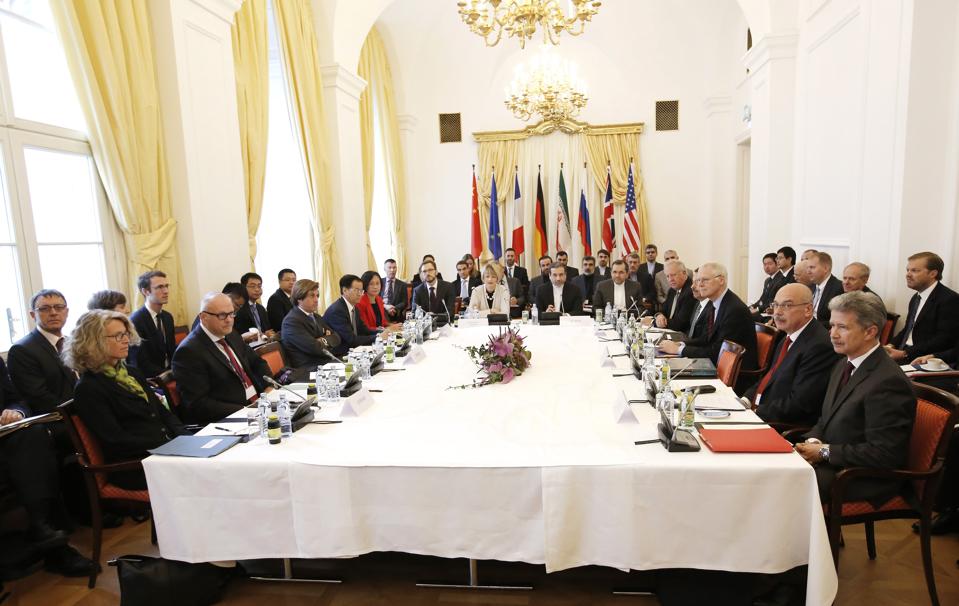
July 14th marks two years of a controversial nuclear deal, known as the Joint Comprehensive Plan of Action (JCPOA), brokered between the international community, represented by the five permanent members of the United Nations Security Council – China, France, Russia, United Kingdom and United States – and Germany, with Iran.
Where are we now? Has Iran changed for the better? Or has Tehran taken advantage of the Obama administration’s concessions to further advance their domestic crackdown, foreign meddling and nuclear/ballistic missile programs?
We are now at a crucial juncture. The Trump administration is currently weighing all options, including regime change, in their evaluation of a comprehensive Iran policy. As wars in various countries and appeasement with Iran have all proved disastrous, regime change by supporting the Iranian people and their organized opposition is the best viable option.
The pro-deal camp described Iranian President Hassan Rouhani as a “reformist” and decided to neglect the massive wave of executions launched during his first tenure. The Iran nuclear deal gave a green light to Tehran, leading to over 3,000 executions during Rouhani’s first term as president.

Joint Comprehensive Plan of Action (JCPOA), the Joint Commission is pictured during its first meeting at the level of